ChatGPT Evolution From 2022 To 2026
First of all, if we communicate approximately ChatGPT, which is very vital, it has now turn out to be part of our everyday life, however while the charts got here out in GPT 2022, it turned into handiest and best LLM.But today, for 2026, the four GPTs have already added AI agent capabilities. So, this complete period is from 2022 onwards; till 2026, different technological developments have taken place in different time frames.
From Generative AI To AI Agents
These are the four that make GPT more powerful.For example, by using 2023, it turns into generative AI; by using 2024, it becomes multi-agent AI. It’s now being used with tools—AI workflows in 2025, and now AI agents. So, in this article, we’ll cover what we learned; we are going to use all those technological terms like rule-based AI, machine learning, deep learning, data pipelines, MLOps, prompt engineering, AI workflows, agents, and multi-agent systems.
Theory Plus Practical Learning
How does it work? We’ll learn all this in detail, and that’s not all—because just knowing isn’t important. The important thing is to use it practically, to see it applied practically. That’s why this article explains it; there are also complete practical applications where we will see all the capabilities of AI.
What You Can Build With AI Today
Today, research can be done using AI; it can be data analysis, report generation, documentation, presentation creation, websites can be built, apps can be created, image generation, article generation, AI agents, and automation. So in this article, I’ll show you… I’m going to teach you all these use cases and we’ll apply them practically using all these AI tools.
Choosing The Right AI Tool For The Right Job
Using AI tools isn’t necessarily a given; it’s important to understand which tool is best for each use case, and which tool to use where. Understanding is also important, so we’ll cover all of these things in today’s article. This article will have two parts: first of all, I will explain to you the conceptual technologies and then we will go and see their practical applications or let’s try the tools.
9 Stages Of AI Explained
I’m going to teach you all the tools here for free; there’s no need for any paid subscription, and best of all, it’s free. I’m also going to show you how to measure productivity, so in this article, we’ll start with the conceptual part. So, if we look at it, AI has nine stages in total. We begin to study and understand each of these stages one by one.
Stage 1 – Rule-Based AI
The first stage—that’s Stage One, which is rule-based AI, which started emerging in the 1990s. It simply involved the AI being given a set of rules, and it knew how to follow only that rule. Real-life examples of this could be ATM machines, calculators, traffic lights, basic chatbots—that was all that was available back then.
How Rule-Based Systems Work
So, just like when we go to an ATM, we get four options that are visible; if I want to withdraw money, I just press the withdraw button, the money will be withdrawn, that’s it, that’s it. So, the first machines that followed these rules were made in the early 1950s—it started to develop. Then came the most powerful thing: machine learning, because the rules limits exist only up to a point.
Stage 2 – Machine Learning Emerges
What will you do if something goes against the rules? That’s when the concept of machine learning emerged, where it was said that we would teach the model using data. The machine learns by looking at the data; what will it do? It will learn to understand patterns. So, the real-life examples that came up here were recommendations from YouTube.
Real Life Example – YouTube And Gmail
Now, when we repeatedly watch a article on YouTube, our data is often being transferred to YouTube—I’m watching so many comedy movies that the next recommendation I get is a comedy. If we talk about Gmail, it automatically… so many mails come here that it becomes clear that if it is written in any mail that “congratulations, you have won the lottery,” it identifies these words and puts them in the spam folder.
More Examples – Netflix, Ola, Uber
Similar to how Netflix works, if I were to book an Ola or Uber to travel from one place to another, the recommendation model would tell me the price, which would be so much. So, all these applications and real-life examples came about because of machine learning—what did it do? It started to understand patterns in the data.
Stage 3 – Deep Learning
Then, if we talk about it, the third stage was deep learning. So, deep learning has been gaining a lot of attention since 2010—it’s powerful. All the mobile phones we’ve been using since 2014 have face unlock, so what’s that example? Is it? That’s an example of deep learning.
Neural Networks And Face Unlock
So what’s the point of deep learning? Here, we’re talking about neural networks, like a human brain can think and understand—so why shouldn’t we build an artificial neural network like this? This allows machines to think and understand things better. A real-life example of this is the Face Unlock feature: as soon as we look at our mobile phone, it recognizes our face and only then does our phone unlock.
Stage 4 – Data Pipelines And MLOps
Google Photos… as we create albums, we automatically receive an album in Google Photos—it began to evolve. This is where the concept of neural networks, which is part of deep learning, came from. If we move forward, the fourth stage was Data Pipelines and MLOps.
Tools Like Airflow, Docker, Kubernetes
This is an important stage because there’s a process involved in running and maintaining the model in production. Now you’ve created a model, but that model also needs to be maintained and put into production—hence the concept of MLOps within machine learning. This is where tools like Airflow, Docker, and Kubernetes were introduced to help us model and work more efficiently; we were able to do that.
Stage 5 – LLMs And Foundation Models
After that, the next stage we introduced was called the LLM and Foundation Model. This stage began in 2017; between 2022 and now, we’ve seen what AI can do. AI can predict—there were prediction models. From one place, if you wanted to go somewhere, you could book an Uber and find out the price.
What Early AI Could And Could Not Do
What else could AI do? It could make recommendations, just like YouTube has a recommendation system, Amazon has one. Then, the classification problem would be solved here; the problem was to determine if an email was spam or not. This was how the problem was solved, so that’s all AI could do—no new data could generate anything new.
Training With Larger Datasets
So, what happened was that models now needed a lot of training, beginning with larger datasets. So, when models began to be trained with larger datasets, the most… previously, we would respond here and receive results based on those responses. This concept came about here, where for the first time, we’re writing something, and what is the model automatically giving us?
ChatGPT, Gemini, Claude – The LLM Revolution
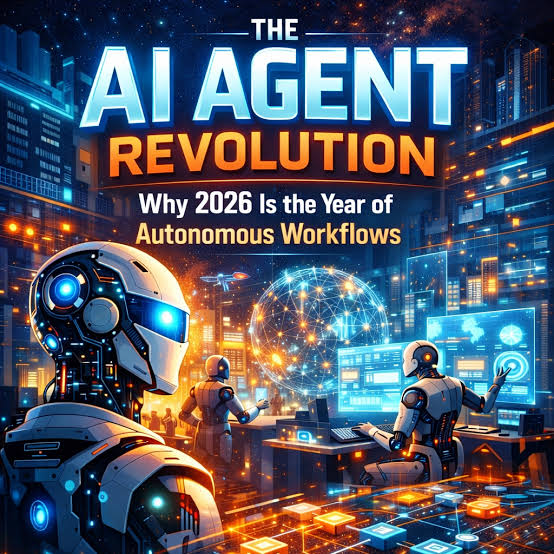
It’s generating results and giving them back, it’s there, it’s producing output, it’s able to create something new on its own. That’s when chat tools like ChatGPT, Gemini, Claude, and Notion AI are available—we’re all using Perplexity today. These are basically LLMs.
First Time AI Could Write Poems And Essays
The first to come out was ChatGPT, which after the revolution, it was said that for the first time this is happening, that we can also get the poem written from ChatGPT inside any one model, we’re able to. We’re also able to write essays; we’re asking some questions and we’re able to get answers.
From Text To Image, article And Code
So this is the starting stage, but gradually these LLMs transitioned to generative AI, because previously, it used to be that if we typed something into ChatGPT, it would only return the result in text format. But gradually, it has been made even better, so that now it has so many capabilities that it can generate text as well as images; it can also generate articles, audio, and write code.
Midjourney, Runway, Stable Diffusion, DALL-E
So, all these capabilities are added on. LLM models began to develop within LLM models, and then LLM began to develop generative AI. There are many examples of this today, whether it’s Midjourney or it’s used in image generation, Runway AI, Stable Diffusion, or DALL-E AI. So, all these different models are emerging.
Next Stage – Prompt Engineering
After this stage, we move on to our next stage, which is prompt engineering. So, we learn as we go; as we go on, we are getting to know about new stages, and so far we have seen that there are many stages of AI. In just four years, four GPT LLMs have gone from having AI agent capabilities to today—it’s starting to keep it.
Why AI Is Moving Fast And Humans Are Slow
So, the development that’s taking place in AI is happening very rapidly. But do you know what the problem is? The problem is the belief that humans are slow—they don’t want to learn. There are still many people who ignore AI or simply, they are the ones who only know how to use AI 1% or 2%.
Basics Are Not Enough
Advancements in AI… I don’t know, it’s not going to work that way. Just knowing the basics won’t do anything; you’ll have to work hard and put in the time. We’ll have to sit in front of a computer and get used to it, only then will we be able to learn AI, because only the basics aren’t enough if you’ll keep learning.
In Jobs And Business, You Must Deliver
So, things aren’t limited to the basics. We’re going to work at any company; regardless of our background, whether you work as an employee in a company or start your own business or do freelancing, you will have an answerable job somewhere—you have to be. No one is going to pay you unless you deliver the best.
From AI User To Problem Solver
So, first of all, it’s important to create an impact with your personality, because the tools are the same for everyone—some are getting more, some are getting less. But unless you have advanced knowledge, there’s no way you’ll be able to earn it; there’s no problem. By advancement, I mean only if you’re learning AI, you’re saying that to me—if you only know how to use GPT and Claude, you’re just an AI user.
Become An AI Builder
You have to become a problem solver, because problem-solving has value in the market. You have to become an AI builder. Now, with the help of this AI, anything can be done, whether it is building an app, creating a website, creating agents, or creating automation—you should know all of these at an advanced level.
Introducing AI For Everyone Cohort
And to solve this very problem, I have finally created for you the complete cohort of “AI for Everyone” course. So now the question is, what is the need for this cohort, and what’s going to be special about this cohort? So, YouTube… I’ve already uploaded a number of free lectures for you, but the most important thing is that if someone needs objective information, if someone has to make a career transition, or someone has to take up a job for the first time, then it is important for them to learn AI in a full-fledged manner at an advanced level, and with proper guidance, they can work on it in a systematic way.
Hands-On Training And Mentor Support
They can receive hands-on training, and they can get direct support from a mentor, who is a YouTube expert—this isn’t possible through this. Therefore, you’ll have 15 to 20 modules within this group, covering AI basics, prompt engineering, data automation, image generation, article creation, AI agents, automation, website building, app development… I’ve already created modules for you on content writing, SEO, digital marketing, and more.
Coupon Code SWATI30 And Enrollment
I’m going to teach you everything in detail myself, and all these modules will be unlocked for you. As soon as you unlock them, clicking on the button will provide an extra discount coupon code specifically for YouTube learners. If you go and apply “SWATI30” coupon code, you will get an extra discount, and you can also buy this coupon as soon as possible so you can enroll in this cohort.
120 Days, 180+ Lectures And Certificate
The link is in the description box below. So, this 120-day cohort is a great way to be in this cohort; there will be over 180 lectures. You will also be provided with a proper certificate. For more details, please visit and check out the description box, and join this cohort as soon as possible.
What Is Prompt Engineering?
So, activate engineering commenced to benefit recognition in 2022-23. What exactly is spark off engineering? Whenever we speak to an AI, we communicate in our own ordinary language—we do. Let me say we’re speakme in English, so we ought to give an explanation for the hassle in English.
Two Types Of Prompting
Only then will we get the best results—it is possible to obtain it, and that is what we call prompting. So, here we discuss two types of prompting: one is direct prompting, and the next type of prompting we’ll discuss is structured prompting. So, what are these two?
Direct Prompting Explained
What happens in direct prompting? We provide instructions, called prompts, that we then directly assign tasks to the AI—they don’t provide any extra context. So, direct prompting is best when we’re asked a direct question we have to ask. For example, if we want to ask, “What is the capital of India?” then we know that we are the only ones asking this question, and we’ll get the answer.
Problem With Direct Prompts – No Context
But instead of this one, if I give another use case—if I tell the AI to create a blog for me, I’m writing a post about coffee. I just gave myself the prompt to write a blog post about coffee, so now the AI doesn’t know why I need to write this particular blog post, what is its purpose, which target audience do I want to write for… Don’t I have to write this in this blog post?
Structured Prompting Solution
I didn’t provide any context for all this. So, somewhere here, problems started to arise. So, for this time, we introduced our structured prompting. What happens in structured writing is that whenever we give a prompt to an AI, it has a persona.
Role – Act As An Expert
First, we identify roles; for example, if I take this coffee example, we’ll write “act as” here under the prompt: “a senior content marketer with 10 years of experience.” So, here’s where the AI knows how to behave: behave like an experienced 10-year-old marketing professional. So, first, we identified the role.
Context And Background
Then, we identify the context and background—it’s important to explain why you need something. So, here we are, let me tell you, we’re launching an organic coffee brand for health-conscious people. Here, the AI understands the context in which it needs to operate.
Target Audience And Task
Then, it basically gives it a target audience; keeping this in mind, we need to write blog posts. Then we started explaining to it the task clearly, what our task was—what do you have to do? Write an engaging blog post with a 300-word introduction. So, it understood the task.
Constraints And Output Format
We’ll define the constraints here, because we tell you everything you want the AI to do, including what it shouldn’t do—you’ll need to specify the constraints. So, we provide all the jargon here, like “best-in-class”—we need to avoid jargon. Finally, we specify the format in which we want the proper output; for example, I require an H1 header for a word header.
The Popular Prompt Framework – RCTCF
This structured approach has come to be known as structured prompting, which is quite popular—it exists, and you too must be using it somewhere. So, where Role, Context, Task, Constraint, and Format exist—this framework is becoming the most popular, which we call Prompt Engineering.
Next Phase – AI Workflows
Next, we move on to our next phase, where we discuss AI workflows, which came in 2022-2023. Now, let’s assume you run a company and need daily reports. What will you do? You will hire an employee to report to you.
How AI Replaces Daily Reporting Work
What will that employee do? The first thing they will do is search for news, read the articles, extract insights from them, create a summary, and then send the email. This is the employee’s job. If I replace this employee’s job with an AI, the AI will do the same thing: the AI will perform the search, analyze it, create a summary, generate a report, and then automatically mail it.
What Are AI Workflows – n8n, Make, Zapier
This is called workflows, where a human would do a task, who is doing it? Here, AI is doing it with greater efficiency. So that’s why we started introducing more workflows like n8n, Make, and Zapier, and I’m going to show you how in this article.
Practical Automation With Zapier
I’m also going to show you a practical use case: we’ll build our own agent automation using Zapier. I am telling you things like its free resources, where to read it, its notes—I will provide you all this. I’ll do it in this article, so let’s complete this article and go through everything one by one.